
Most of the world’s power grid runs on alternating current, yet some of the largest and most important transmission links in the world run on direct current. High-voltage direct current, or HVDC, transmission moves huge amounts of power over very long distances, under the sea, and between grids that cannot be connected any other way. From the 1,000-kilometer links that carry hydropower across China to the subsea cables that connect offshore wind farms to shore, HVDC is the technology that makes modern bulk power transfer possible. This guide explains how HVDC transmission works, how it differs from ordinary AC transmission, and where it is used.
The idea behind HVDC is straightforward: convert AC to DC at one end of the line, send the power as direct current, and convert it back to AC at the other end. The converter stations at each end are the heart of the system, and they use power electronics to switch the current thousands of times per second. Because DC lines do not suffer from the reactive power losses and stability limits of long AC lines, HVDC becomes the cheaper and more efficient choice once the distance is long enough, typically beyond about 600 to 800 kilometers for overhead lines and far shorter for subsea cables.
What Is HVDC Transmission?
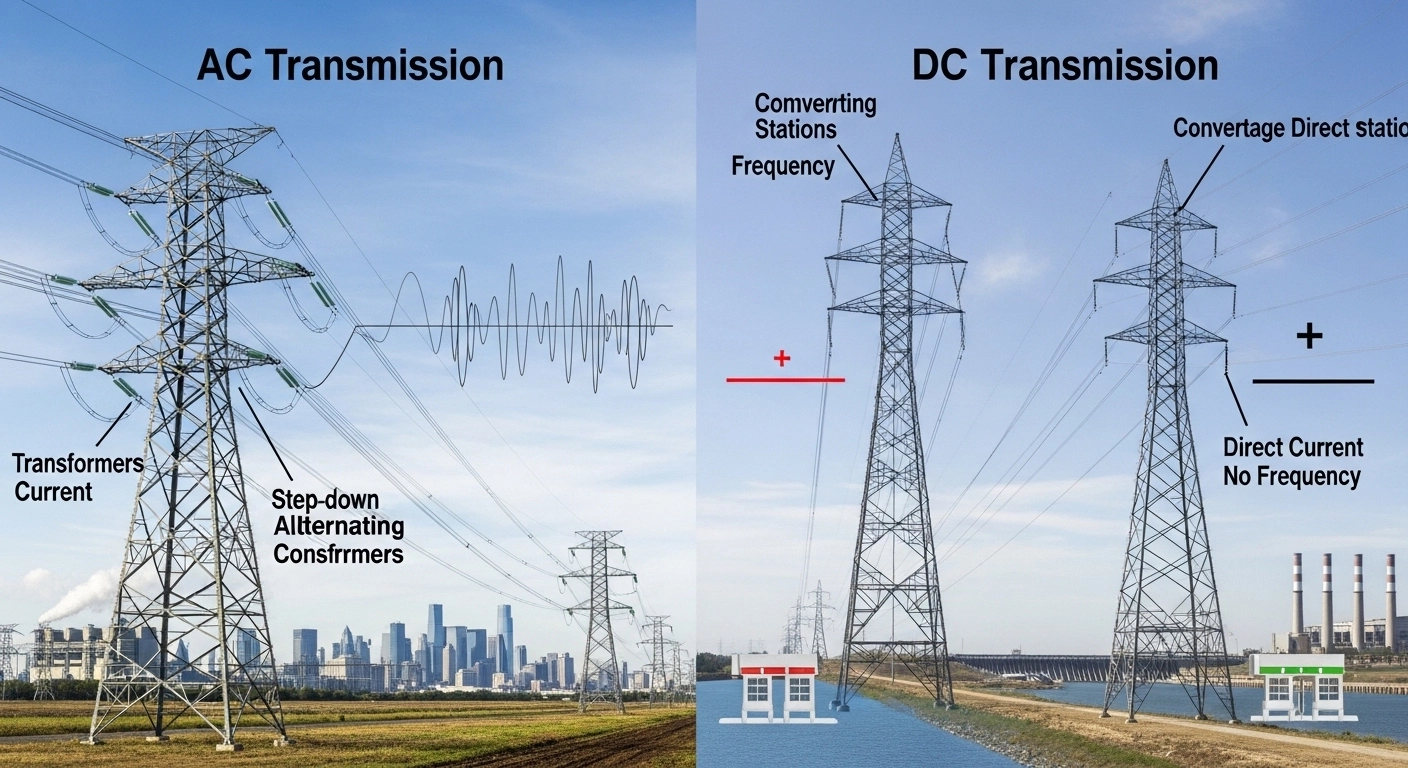
HVDC transmission is the bulk transfer of electrical power using high-voltage direct current. A typical HVDC link has three parts: a converter station that changes AC to DC, a transmission line or cable that carries the DC power, and a second converter station that changes the DC back to AC. The DC voltage is very high, commonly 500 kilovolts, 800 kilovolts, or more, because high voltage keeps the current and the losses low. HVDC is not a replacement for the AC grid; it is a specialized tool for moving power between two points that are far apart, separated by water, or running on grids that are not synchronized. For the basics of how AC and DC compare in transmission, see our article on AC vs DC transmission.
How HVDC Works
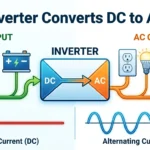
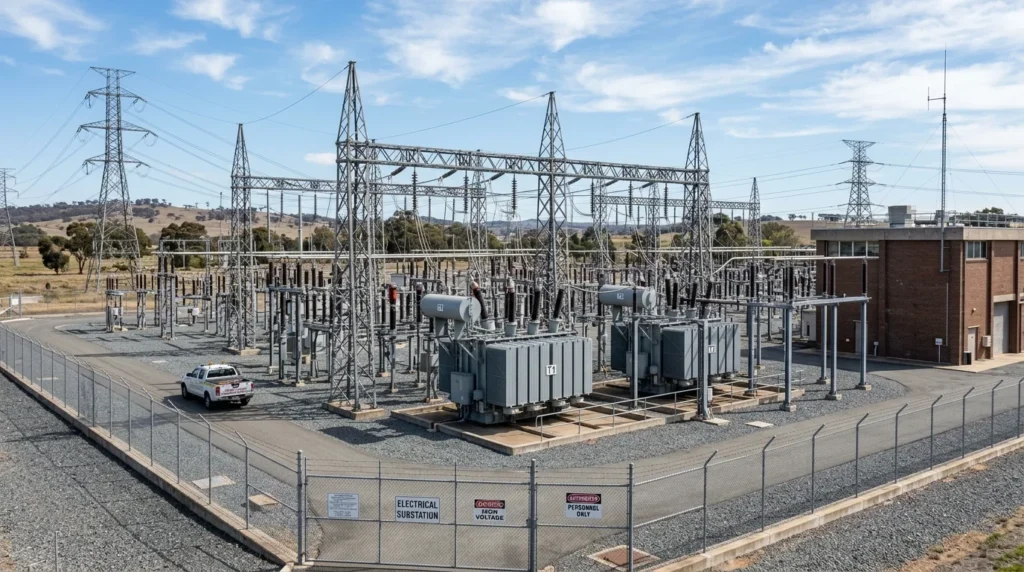
An HVDC link starts at the sending converter station, where transformers step the AC voltage up to the level the converter needs. The converter then rectifies the AC into DC by switching its valves in a precise sequence, and the DC power travels along the line to the receiving station. There, an inverter reverses the process, switching the DC back into AC that matches the frequency and phase of the receiving grid. Modern converter stations use two main technologies: line-commutated converters, which use thyristors and rely on the AC grid to switch, and voltage-source converters, which use insulated-gate bipolar transistors and can switch independently. Filters and reactive power equipment keep the power quality clean, and control systems adjust the power flow in milliseconds.
LCC vs VSC Converters
The two converter technologies serve different needs. Line-commutated converters, or LCC, are the older and more powerful technology. They use thyristor valves, handle the highest power ratings, and are the standard choice for very long overhead lines carrying several gigawatts. Their drawback is that they need a strong AC grid to commutate, and they consume reactive power. Voltage-source converters, or VSC, use IGBTs and can control active and reactive power independently, connect to weak grids, and even start a dead grid. They are the standard choice for offshore wind, subsea cables, and city infeed, where flexibility matters more than raw power. The table below summarizes the differences.
| Feature | LCC (Thyristor) | VSC (IGBT) |
|---|---|---|
| Power rating | Up to 12 GW | Up to about 3 GW per link |
| Grid requirement | Needs a strong AC grid | Works with weak grids and black start |
| Reactive power | Consumes reactive power | Controls reactive power independently |
| Best for | Long overhead lines | Offshore wind, subsea cables, city infeed |
Advantages of HVDC over HVAC
HVDC has several advantages over high-voltage AC transmission. A DC line has lower losses over long distances because there is no reactive power flow and no skin effect, so the same conductor carries more usable power. A DC line needs only two conductors instead of three, which makes towers narrower and cables simpler. DC links can connect grids that run at different frequencies or are not synchronized, which AC lines cannot do at all. And a DC link’s power flow can be controlled precisely and changed in milliseconds, which helps grid operators manage congestion and respond to faults. These advantages are why HVDC is chosen for the longest and most demanding links in the world.
- Lower losses over long distances: no reactive power and no skin effect.
- Fewer conductors: two wires instead of three, with narrower towers.
- Connects asynchronous grids: links systems with different frequencies or no synchronization.
- Precise power control: flow can be adjusted in milliseconds.
- Longer cable distances: subsea and underground cables without the AC charging current limit.

Where HVDC Is Used
HVDC is used wherever AC transmission reaches its limits. The longest overhead HVDC lines carry hydropower from remote dams to distant cities, such as the links in China and Brazil that run for more than 2,000 kilometers. Subsea HVDC cables connect islands and offshore wind farms to the mainland, including the links between the United Kingdom and Europe and the cables that bring power from North Sea wind farms ashore. HVDC also connects grids that cannot be synchronized, such as the links between the eastern and western grids of North America and between different countries in Europe. As renewable energy grows, HVDC is becoming more important, because the best wind and solar resources are often far from the cities that need the power. Our guide to the power transmission system explains how these links fit into the wider grid.
Challenges and Costs
HVDC is not the right choice for every line. The converter stations are expensive, complex, and take up significant space, which is why HVDC only pays off over long distances or where AC cannot work. The power electronics need cooling, maintenance, and skilled staff, and a fault in a converter station can take the whole link out of service. HVDC also needs specialized protection and control systems, because DC faults behave differently from AC faults and cannot be cleared by ordinary AC breakers. Despite these challenges, the cost of HVDC has fallen steadily as power electronics have improved, and the technology is now used in dozens of countries. For how power reaches homes after the bulk transmission stage, see our article on the power distribution system.
Frequently Asked Questions
What is HVDC transmission?
HVDC transmission is the bulk transfer of power using high-voltage direct current. AC is converted to DC at the sending station, carried over a line or cable, and converted back to AC at the receiving station.
Why use HVDC instead of AC?
HVDC has lower losses over long distances, needs only two conductors, can connect grids that are not synchronized, and allows precise control of power flow. It is the best choice for very long lines, subsea cables, and asynchronous interconnections.
What is the difference between LCC and VSC HVDC?
LCC uses thyristors, handles the highest power, and needs a strong AC grid. VSC uses IGBTs, works with weak grids, controls reactive power independently, and can black-start a grid.
How far can HVDC transmit power?
HVDC overhead lines routinely run 1,000 to 2,000 kilometers, and some exceed 3,000 kilometers. Subsea HVDC cables span hundreds of kilometers, far beyond the practical limit for AC cables.
Is HVDC used for offshore wind?
Yes. VSC HVDC is the standard way to connect large offshore wind farms to shore, because it can carry power over long subsea distances, connect to weak onshore grids, and control reactive power.
Conclusion
HVDC transmission is the technology that moves bulk power where AC cannot reach: across continents, under the sea, and between grids that do not share a frequency. Its converter stations are expensive and complex, but for long distances and difficult routes they deliver lower losses, better control, and connections that would otherwise be impossible. As wind and solar power grow and grids become more interconnected, HVDC will carry an ever larger share of the world’s electricity, and understanding how it works is essential for anyone who follows the power industry.
To see how HVDC technology is applied in real projects, see Hitachi Energy’s overview of HVDC systems and their uses in power transmission.