
Both power transformers and distribution transformers do the same basic job: they change the voltage of alternating current. But they do it in very different places, at very different scales, and with very different designs. A power transformer can be the size of a house and handle hundreds of megawatts; a distribution transformer sits on a pole outside your home and serves a handful of houses.
Knowing the difference matters whether you are studying for an exam, specifying equipment, or just trying to understand the grid. This guide compares power transformers and distribution transformers side by side, so you can tell them apart and know where each one belongs.
What Is a Power Transformer?
A power transformer is a large transformer used in transmission networks, stepping voltage up at generating stations and down at grid substations. It handles high voltages, usually above 33 kV, and large power ratings, from a few MVA to hundreds of MVA. It is designed for maximum efficiency at full load, because it runs near full load most of the time.
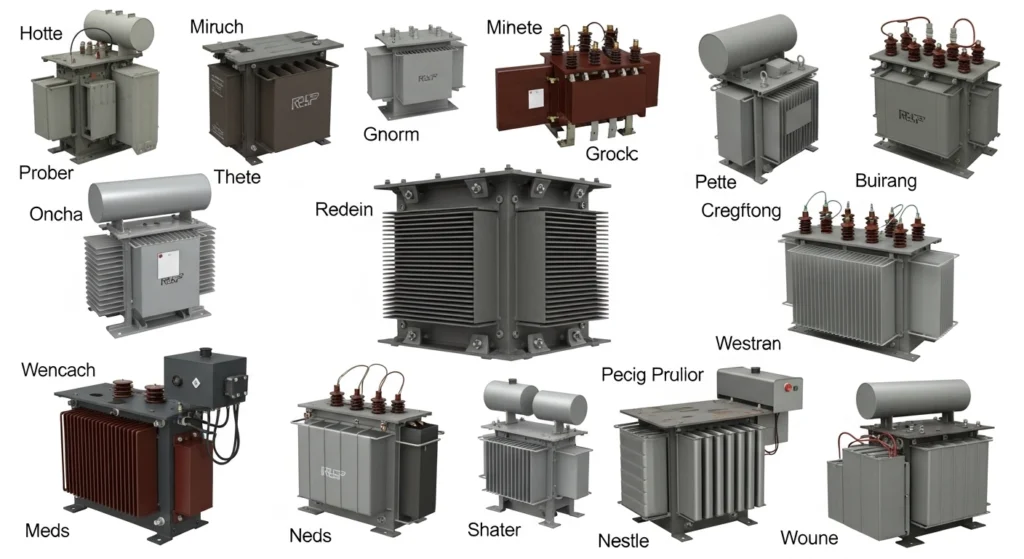
Power transformers are built to order for a specific site, with on-load tap changers, forced oil and air cooling, and extensive monitoring. They are expensive, and a failure can take a whole region offline, so they are protected and maintained with great care. Our guide to what a transformer is explains the basic principle both types share.
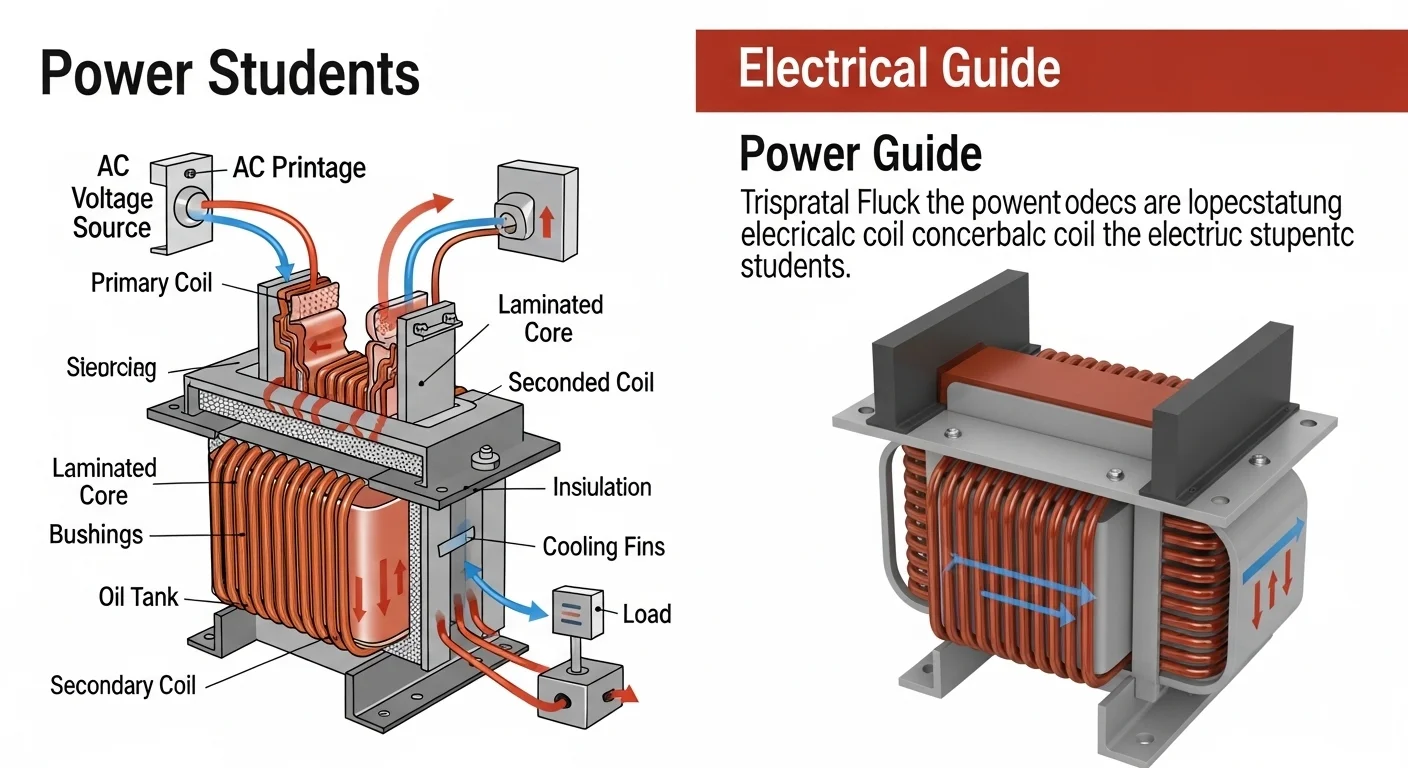
What Is a Distribution Transformer?
A distribution transformer is a smaller transformer used in distribution networks, stepping medium voltage (11 kV or 33 kV) down to the low voltage homes and businesses use, typically 400 V three-phase or 230 V single-phase. It is the last transformer in the chain before the consumer.
Distribution transformers are mass-produced in standard sizes, from a few kVA to a few MVA, and they sit on poles, on pads, or in substations close to the load. They are designed for maximum efficiency at about 50% load, because the load varies widely through the day and they rarely run at full load. They use natural oil and air cooling, and most have only an off-circuit tap changer, adjusted when the transformer is switched off.
Power Transformer vs Distribution Transformer: Key Differences
Here is the comparison at a glance:
| Feature | Power transformer | Distribution transformer |
|---|---|---|
| Voltage level | Above 33 kV | 11 kV or 33 kV down to 400/230 V |
| Power rating | A few MVA to hundreds of MVA | A few kVA to a few MVA |
| Location | Generating stations and grid substations | Near consumers, on poles or pads |
| Load | Near full load most of the time | Varies widely, often well below full load |
| Best efficiency at | Full load | About 50% load |
| Cooling | Forced oil and air, sometimes water | Natural oil and air |
| Tap changer | On-load tap changer | Off-circuit tap changer |
| Design | Built to order for the site | Mass-produced in standard sizes |
Efficiency and Losses
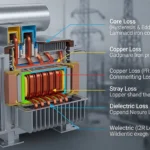
Both types are very efficient, typically 97% to over 99%, but they are optimized for different operating points. A power transformer is designed so its copper loss equals its iron loss at full load, which is where it spends most of its life. A distribution transformer is designed so the two losses are equal at about half load, because that is its typical operating point.
Iron loss, the loss in the core, is present whenever the transformer is energized, so it dominates for a distribution transformer that sits lightly loaded all day. Copper loss grows with the square of the load current, so it dominates for a power transformer running near full load. Getting the balance right is what makes each type efficient in its own role.
Which Transformer Is Used Where?
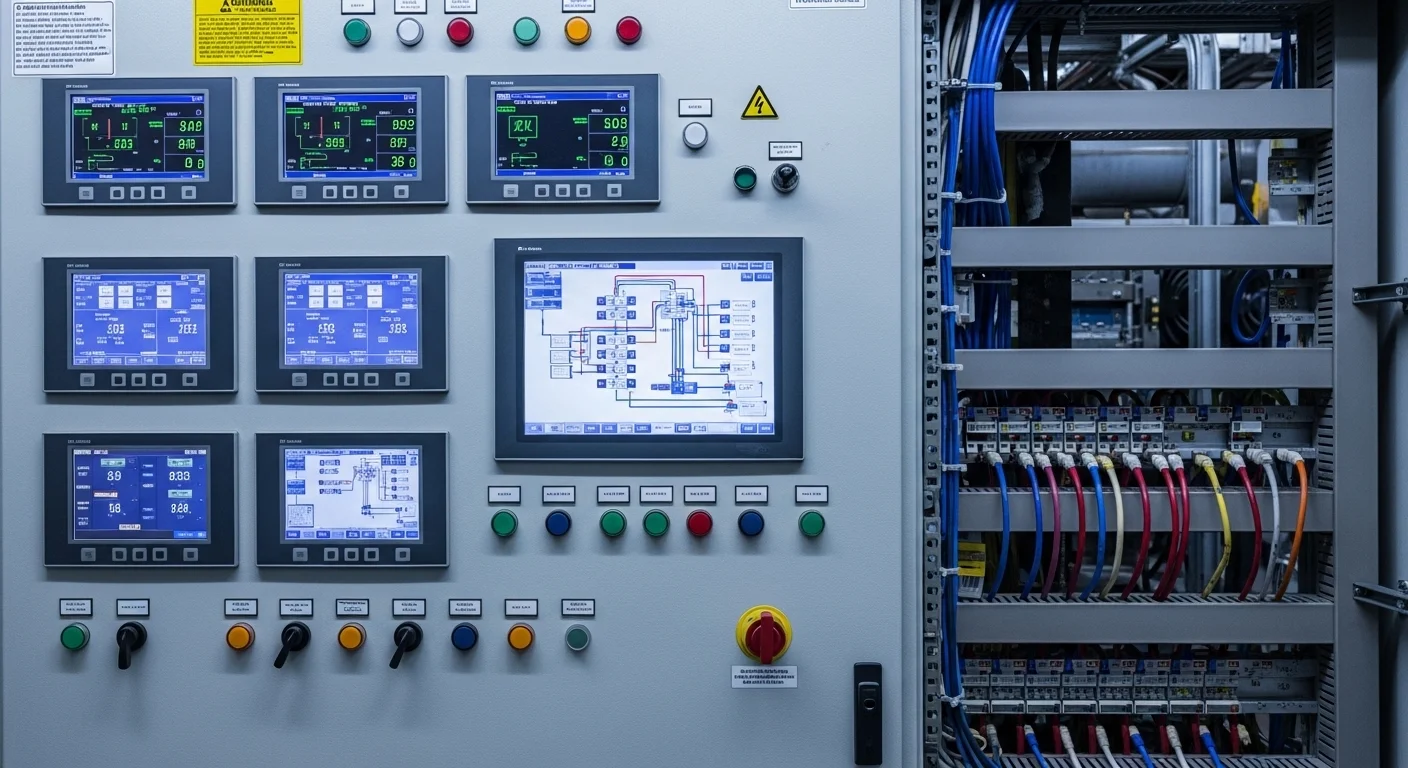
The two types sit at different points in the power system:
- Generating stations use a step-up transformer, a power transformer that raises generator voltage to transmission level
- Grid substations use power transformers to step transmission voltage down to sub-transmission level
- Primary substations use power transformers or large distribution transformers to feed the distribution network
- Streets, housing estates, and industrial parks use distribution transformers to deliver low voltage to consumers
- Large factories may have their own distribution transformers stepping 11 kV down to 400 V on site
Frequently Asked Questions
What is the main difference between a power transformer and a distribution transformer?
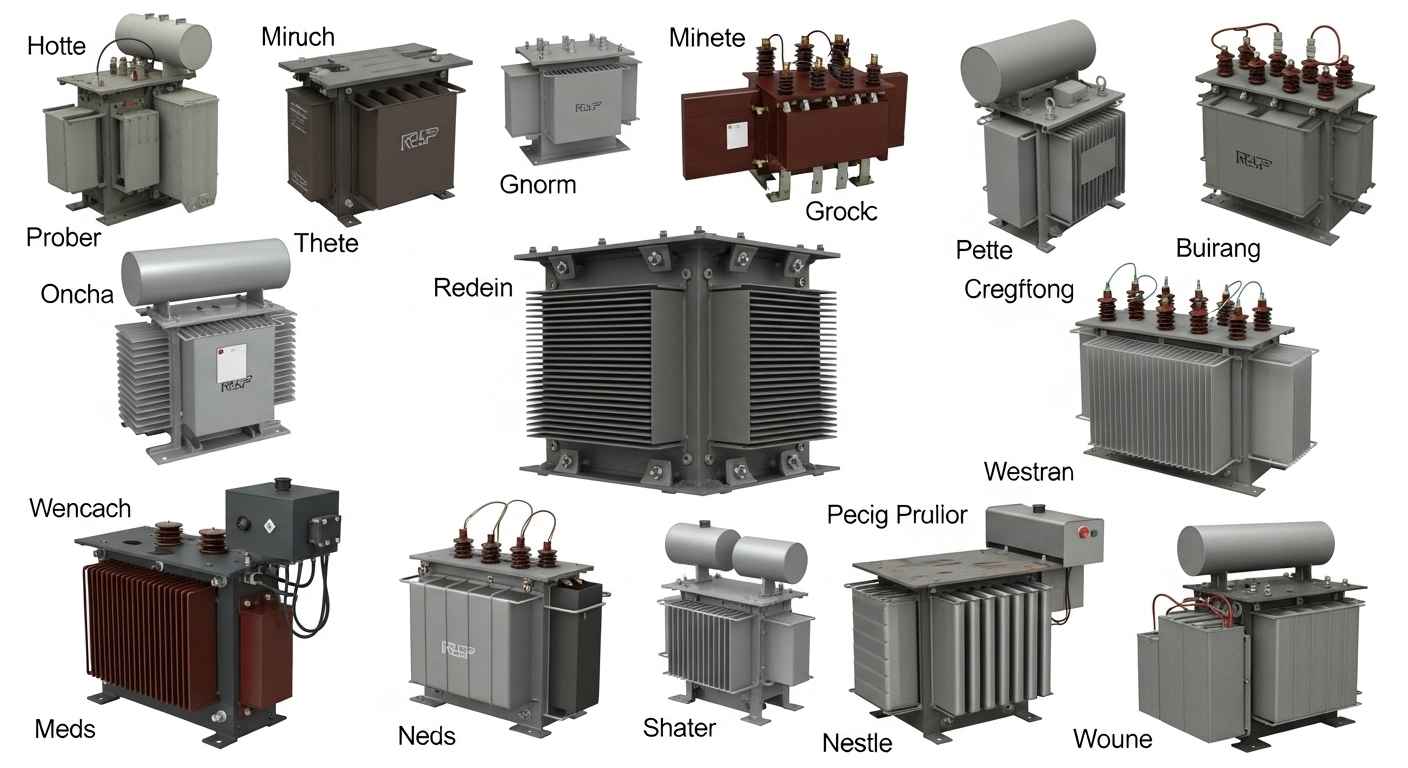
Size, voltage, and where they sit in the network. Power transformers are large units in transmission networks handling high voltages and large loads, while distribution transformers are smaller units near consumers stepping medium voltage down to low voltage. The different types of transformers are all designed for a specific place in the grid.
Why are distribution transformers designed for maximum efficiency at 50% load?
Because their load varies widely through the day and they rarely run at full load. Designing the peak efficiency point at about half load means they waste the least energy over a typical day. Power transformers, which run near full load most of the time, are designed for peak efficiency at full load instead.
Can a power transformer be used as a distribution transformer?
Technically yes, but it would be wasteful and expensive. A power transformer is built for high voltage and full-load efficiency, with forced cooling and an on-load tap changer that a distribution job does not need. It would cost far more and run less efficiently at the light loads typical of distribution.
What is the difference between an on-load and an off-circuit tap changer?
An on-load tap changer changes the voltage ratio while the transformer is energized and carrying load, which is what power transformers need to keep voltage steady as the load changes. An off-circuit tap changer can only be moved when the transformer is switched off, which is acceptable for a distribution transformer that is adjusted rarely.
Which transformer is more efficient?
Power transformers are slightly more efficient at their rated load, often above 99%, because they are larger and the losses are a smaller fraction of the power handled. Distribution transformers are typically 97% to 99% efficient. The difference is small, but across a whole network it adds up to a lot of energy.
Conclusion
Power transformers and distribution transformers are two halves of the same system: one moves bulk power across the country at high voltage, the other delivers it safely to homes and businesses at low voltage. The power transformer is big, custom-built, and optimized for full load; the distribution transformer is small, standardized, and optimized for the half-load it usually sees. Together, they are what makes the grid work.
For a detailed comparison of ratings, losses, and construction, see the guide at Electrical4U.